Spanish Cuajada: 7 Secrets to Make the Authentic at Home
Cuajada is not just a dessert; it’s a cultural emblem deeply rooted in the pastoral traditions of northern Spain, especially in the Basque Country and Navarre. Often referred to as mamia, kallatua, or gaztambera, cuajada is a creamy dairy product made by curdling sheep milk using natural rennet. It’s simple, rustic, and entirely soulful—everything that defines traditional Spanish cuisine.
Ingredients
- 1 L Fresh sheep milk (preferably non-UHT, spring milk is best)
- 4 drops Liquid rennet (or follow your rennet packaging instructions)
Optional toppings:
- Honey to taste
- Sugar to taste
- Chopped walnuts, raisins, or diced fruit
Instructions
- Preparing the Milk: Start gently heating the sheep milk to around 37–40°C (98–104°F). This is body temperature—warm to the touch but not hot. You can use a thermometer for accuracy, but after a few times, you’ll recognize the right warmth with your fingers.
- Using Rennet the Right Way:Once the milk is warm, remove it from heat immediately. Add the rennet, usually just a few drops or a small amount dissolved in water, depending on the brand—and stir very gently. The goal is to distribute it evenly without disrupting the milk too much.Let it rest, unmoved and covered, for about 30 to 45 minutes. During this time, the milk will begin to coagulate, forming a soft, custardy texture.
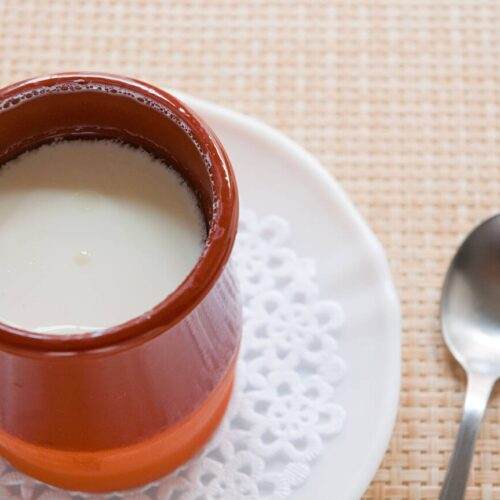
- Serving in Traditional Clay Pots:The traditional way to serve cuajada is in ceramic or clay pots. These retain heat well and add a beautiful rustic aesthetic. Once the curd is set, you can either serve it as-is or chill it for a firmer consistency.Top with a drizzle of honey, a sprinkle of sugar, or your favorite nuts and dried fruits. You can also enjoy it plain to really savor the flavor of the milk.
Notes
Optional – Refrigeration for chilled serving: 1 to 2 hours