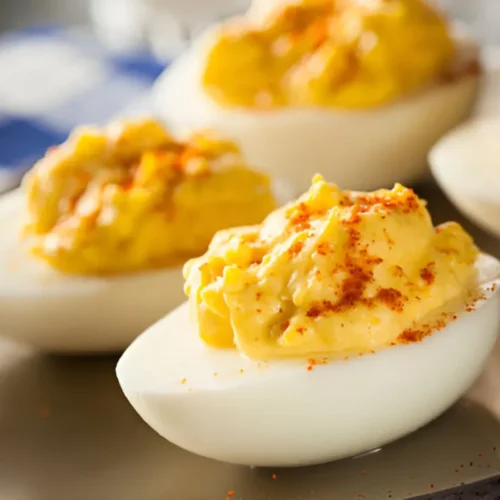
Spanish Deviled Eggs: 3 Tips to Master it
There are dishes that we naturally associate with certain times of the year. Casseroles for the winter barbecues for the spring, and Spanish deviled eggs for the summer (though they’re also a common sight during the holiday season). One of the best things about deviled eggs is their adaptability; they can be filled with tuna, shrimp, peppers, guacamole, or even colored black for a unique twist.
Ingredients
- 6 large eggs
- 1 can of high-quality Spanish tuna in olive oil
- 2 tbsp of mayonnaise
- 1 tsp of pimentón (Spanish smoked paprika)
- 1 tbsp of olive oil
- 1 tbsp of finely chopped pimientos (roasted red peppers)
- A pinch of salt and black pepper
- Optional garnish: olives, chives, or a sprinkle of extra pimentón.
Instructions
- Boil the eggs: Start by placing eggs in a saucepan, covering them with cold water, and bringing them to a boil. Once boiling, reduce the heat and let them simmer for 10–12 minutes. After cooking, immediately transfer the eggs to an ice bath to cool them down. This makes peeling easier.
- Prepare the filling: Once the eggs are cooled, peel and slice them lengthwise. Scoop out the yolks and place them in a bowl. Mash the yolks with the mayonnaise, pimentón, olive oil, and a pinch of salt and pepper. Fold in the tuna and pimientos for that rich Spanish taste.
- Assemble the eggs: Spoon the mixture back into the egg whites, using a piping bag if you want a more decorative look.
- Garnish: Finish by garnishing with slices of olives or a light sprinkle of pimentón. The bold colors and flavors will make these eggs stand out on any table.
Notes
Nore Tips:
- For a richer flavor, use homemade mayonnaise.
- Feel free to customize the filling with your favorite ingredients. Some popular options include salmon or avocado.
- To prevent the eggs from cracking during cooking, pierce the bottom of each egg with a needle before placing them in the boiling water.