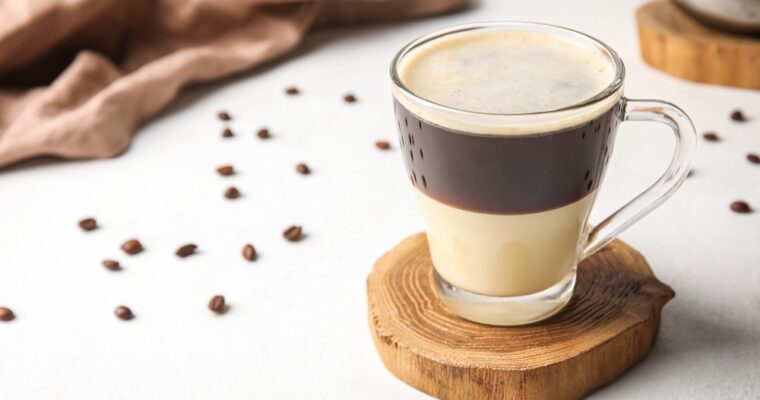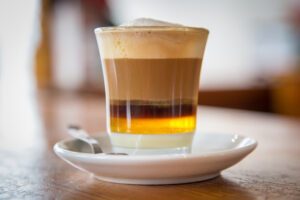
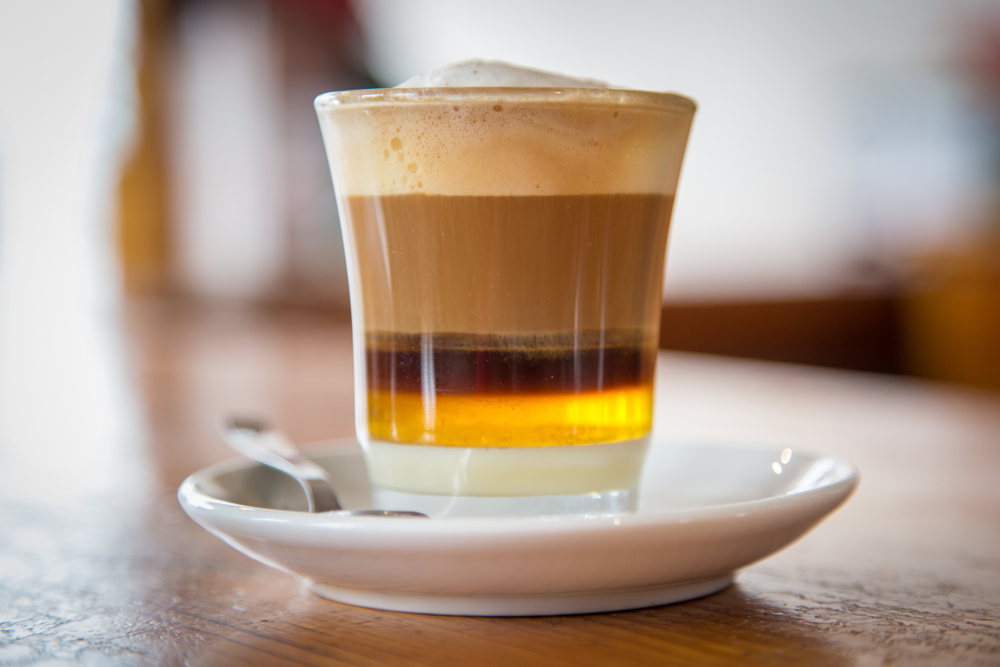
The barraquito, sometimes called zaperoco in certain parts of Tenerife, is a layered Spanish coffee that has become a true symbol of the Canary Islands. Unlike a cappuccino or a café con leche, the barraquito is served in a tall glass that showcases its colorful layers: creamy condensed milk at the bottom, a golden ribbon of Licor 43, a rich dark espresso, and a cloud of frothy steamed milk on top. The drink is finished with a dusting of cinnamon and a twist of lemon zest.
What makes barraquito unique is not just its appearance, but the balance of flavors. The sweetness of the condensed milk, the citrus-vanilla notes of Licor 43, and the bitterness of the espresso combine in a way that is both comforting and sophisticated.
When I first tried barraquito in Tenerife, I realized it wasn’t just a coffee—it was a ritual. Locals order it after meals, in mid-afternoon breaks, or simply to savor time with friends. The layers invite a choice: sip them separately, enjoying how the flavors change as you drink, or stir everything together for a smooth, dessert-like coffee. At home, I’ve prepared it countless times, and I’ve found the key is patience and respect for the layers.
Table of Contents
A Brief History of Barraquito Coffee
Like many traditional drinks, the origin of barraquito is debated, but most stories trace it back to mid-20th-century Tenerife. Local cafes began experimenting with condensed milk (widely available in Spain due to its long shelf life) and Licor 43, a Spanish liqueur flavored with vanilla and citrus.
The combination was not accidental. Condensed milk balances the bitterness of strong espresso, and Licor 43 adds warmth and complexity. With steamed milk added, the drink became a coffee-based digestif that could be enjoyed anytime.
In some parts of Tenerife, ordering a barraquito will get you the full layered version with alcohol. In other regions, “barraquito” refers to a non-alcoholic layered coffee, and the boozy one is called a zaperoco. Travelers are often surprised by these local variations, but that’s part of its charm: barraquito reflects the creativity and the hospitality of the Canary Islands.
Ingredients You Need for Barraquito Coffee
To make one glass of authentic barraquito, you’ll need:
- 1 shot of espresso (about 30 ml): Use strong, freshly brewed coffee. Espresso machines, moka pots, or a strong French press can work.
- 1–2 tablespoons sweetened condensed milk: This forms the base and the sweetest layer.
- 20 ml Licor 43: The traditional choice, with citrus and vanilla notes. Substitutes include Cointreau, Kahlúa, or a homemade vanilla syrup for a non-alcoholic version.
- 100 ml steamed milk with foam: Whole milk froths best, but oat or almond milk also works.
- Ground cinnamon: A light sprinkle on top adds aroma and contrast.
- Lemon zest: A traditional garnish that brightens the drink.
Ingredient Notes and Substitutions
- Condensed milk: Essential for the authentic texture and sweetness. Evaporated milk or cream won’t create the same layered effect.
- Licor 43: If unavailable, try Grand Marnier for citrus depth, or vanilla syrup for an alcohol-free barraquito.
- Coffee: A dark roast espresso gives balance. Too light a roast may get lost in the sweetness.
When I first tried making barraquito at home, I underestimated the importance of glass choice. A tall, transparent glass is crucial to show off the layers—half the beauty of the drink lies in its presentation.
Step-by-Step Barraquito Recipe
Step 1: Prepare the Glass
Choose a tall, clear glass. Warm it slightly with hot water to avoid temperature shock when adding espresso later.
Step 2: Add Condensed Milk
Pour 1–2 tablespoons of sweetened condensed milk into the base. This layer should be thick and heavy enough to sit firmly at the bottom.
Step 3: Layer the Licor 43
Slowly pour the Licor 43 over the back of a spoon so it floats gently above the condensed milk.
Step 4: Pull a Fresh Espresso Shot
Brew a strong espresso and let it rest for 10–15 seconds. Carefully pour it into the glass, again using a spoon to avoid breaking the layers.
Step 5: Steam and Froth the Milk
Froth the milk until it’s smooth with microfoam. Slowly add it on top of the espresso.
Step 6: Garnish
Sprinkle ground cinnamon and zest a lemon peel directly over the foam. Serve immediately.
My tip: If your layers blur together, don’t worry. The first few tries can be messy, but once you master slow pouring and the spoon technique, the result is striking.
How to Achieve Perfect Layers
- Density matters: Condensed milk is the heaviest, followed by liqueur, coffee, and foam. Respect this order.
- Pour slowly: Always pour liquids over the back of a spoon.
- Rest between layers: Give each layer 5–10 seconds to settle before adding the next.
- Glass shape: Tall, narrow glasses work better than short, wide ones.
When I practiced at home, I realized the biggest mistake was rushing. Once I slowed down, each layer formed naturally, and the result was café-worthy.
Tips and Variations (With or Without Alcohol)
Non-Alcoholic Barraquito
Skip the liqueur and add an extra splash of espresso or vanilla syrup. The result is just as enjoyable and still visually striking.
Sweeter Version
Increase the condensed milk if you prefer a dessert-like drink.
Lighter Version
Reduce condensed milk, and use semi-skimmed milk for a less heavy drink.
With Different Liqueurs
Try Cointreau (for orange), Amaretto (for almond), or Baileys (for creaminess).
Serving Suggestions
- Serve after dinner as a dessert coffee.
- Pair with almond cookies or Spanish tarta de Santiago.
- Offer both alcoholic and non-alcoholic versions at gatherings.
Related Spanish Coffee Recipes
Café Bombón
Carajillo
Café Asiático
Café con Leche
Exploring these recipes shows a long tradition in Spain of blending coffee with sweetness and spirits, a reminder that barraquito is part of a larger story.
Frequently Asked Questions About Barraquito
Is barraquito always made with alcohol?
Not necessarily. In some regions, the alcoholic version is called zaperoco, while barraquito refers to the non-alcoholic layered coffee.
What makes the layers stay separate?
Density. Condensed milk is heavy, while frothy milk is light. Pouring gently and in order keeps them distinct.
Can I replace Licor 43?
Yes. Vanilla liqueur, Cointreau, or Amaretto works. For alcohol-free, vanilla syrup is best.
Why lemon zest on top?
It adds a fresh aroma that balances the sweetness. Without it, the drink feels heavier.
What glass should I use?
A clear, tall glass is ideal. Mugs hide the layers, which are central to the experience.
How do locals drink barraquito?
Some stir it all together into a sweet, creamy mix. Others sip through the layers, letting the flavors blend in the mouth. I prefer leaving the layers intact for the first half, then stirring at the end.
Is it difficult to make at home?
No. The trickiest part is patience when layering, but after one or two tries, you’ll be pouring like a pro.
Conclusion and Next Step
Barraquito is more than coffee; it’s a taste of Tenerife, a drink that captures the island’s creativity and love for flavor. Whether you prepare it with Licor 43 or skip the alcohol, whether you stir or sip the layers, the experience is both comforting and indulgent.
I’ve made it countless times outside the Canary Islands, and it never fails to impress guests. The beauty of barraquito lies not only in its striking appearance but also in its versatility: dessert, digestif, or simply a moment of pleasure.
If you enjoyed this recipe, I’d love to hear from you: do you prefer your barraquito stirred or layered? Leave a comment below with your thoughts. If you want more authentic Spanish recipes and coffee traditions, subscribe to our newsletter, you’ll get new ideas straight in your inbox.

5 Proven Steps to Make Authentic Barraquito Coffee
Ingredients
- 30 ml espresso 1 shot, freshly brewed
- 20 ml Licor 43 ≈ 1½ tablespoons
- 30-40 g sweetened condensed milk ≈ 2 tablespoons
- 100 ml steamed milk with a thin layer of foam
- 1 pinch ground cinnamon
- 1 strip of lemon zest freshly grated
Instructions
- Prepare the Glass:Choose a tall, clear glass. Warm it slightly with hot water to avoid temperature shock when adding espresso later.
- Add Condensed Milk:Pour 1–2 tablespoons of sweetened condensed milk into the base. This layer should be thick and heavy enough to sit firmly at the bottom.
- Layer the Licor 43:Slowly pour the Licor 43 over the back of a spoon so it floats gently above the condensed milk.
- Pull a Fresh Espresso Shot:Brew a strong espresso and let it rest for 10–15 seconds. Carefully pour it into the glass, again using a spoon to avoid breaking the layers.
- Steam and Froth the Milk:Froth the milk until it’s smooth with microfoam. Slowly add it on top of the espresso. Sprinkle ground cinnamon and zest a lemon peel directly over the foam. Serve immediately.