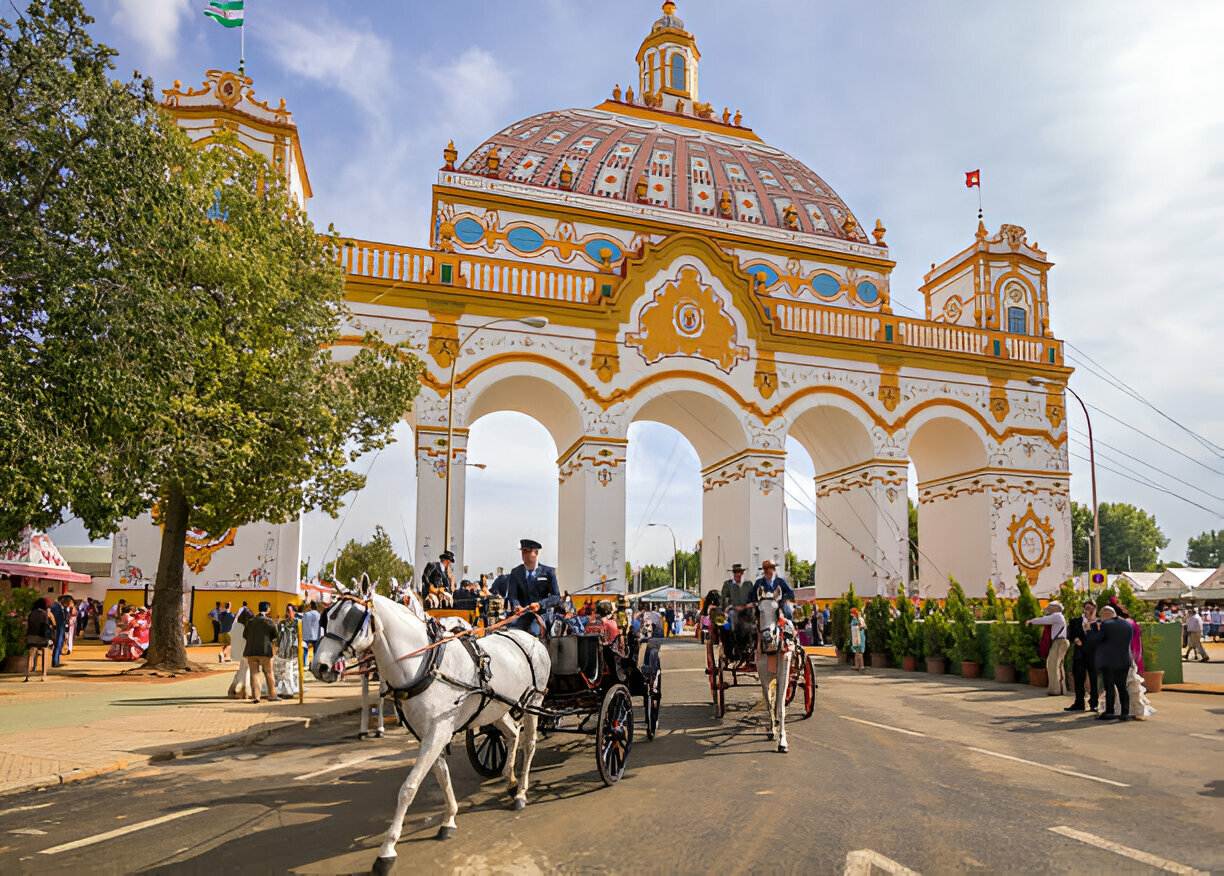
Every April, Seville transforms into a bustling, colorful spectacle of music, dance, and tradition with the Feria de Abril (April Fair). This week-long festival is a celebration of Andalusian culture, featuring flamenco performances, horse parades, and, most importantly, incredible food and drink.
The Feria dates back to 1847 when it started as a livestock fair. Over the years, it evolved into Seville’s most iconic social event, where families, friends, and businesses set up casetas (private and public tents) to enjoy the festivities. Inside these casetas, people feast on traditional tapas, fried fish, and local specialties, all accompanied by plenty of rebujito, the fair’s signature drink.
If you’re attending the Feria for the first time, knowing what to eat and drink is essential to experiencing it like a true Sevillano. Here’s your ultimate food guide to the Feria de Sevilla!
Table of Contents
The Portada: The Grand Entrance to the Fair
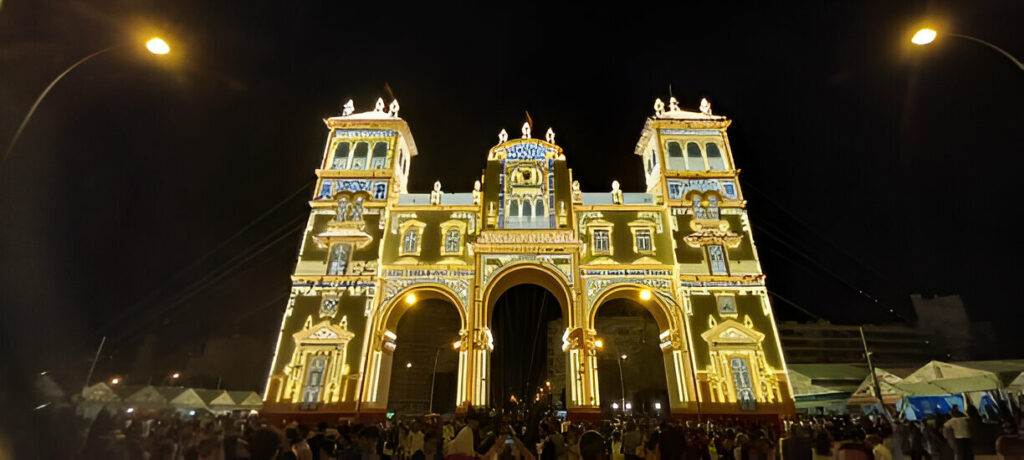
One of the most iconic symbols of the Feria de Sevilla is the Portada, the grand entrance gate that welcomes visitors into the fairgrounds. This massive, illuminated structure is different every year, designed to reflect a part of Seville’s history, culture, or architecture.
Facts about the Portada:
- The design changes annually and is chosen through a competition.
- It stands over 40 meters high and is covered with thousands of lightbulbs (bombillas), which are switched on during “El Alumbrao”, the fair’s grand opening.
- The moment the Portada lights up marks the official start of the Feria, usually on a Monday at midnight.
For Sevillanos, passing through the Portada is a tradition. People take pictures, meet up with friends, and begin their week of celebration under its lights.
Music and Flamenco: The Soundtrack of the Fair
The Feria de Sevilla isn’t just about food and drink—it’s a festival filled with music, dance, and flamenco. Throughout the fairgrounds, you’ll hear the unmistakable sounds of:
Sevillanas – The most traditional Feria music, Sevillanas is a flamenco song and dance with four distinct parts.
Rumbas and Flamenco Fusion – Many casetas mix traditional flamenco with modern Spanish music, creating an electrifying atmosphere.
Live Bands and Orchestras – Some larger casetas have live musicians performing throughout the night.
People of all ages dance Sevillanas at the Feria, from beginners to experienced flamenco dancers. Even if you don’t know how to dance, watching the performances is an experience.
Fun fact: Sevillanos practice Sevillanas all year, especially in dance schools, to be ready for the Feria!
The Role of Horses and Carriages at the Feria
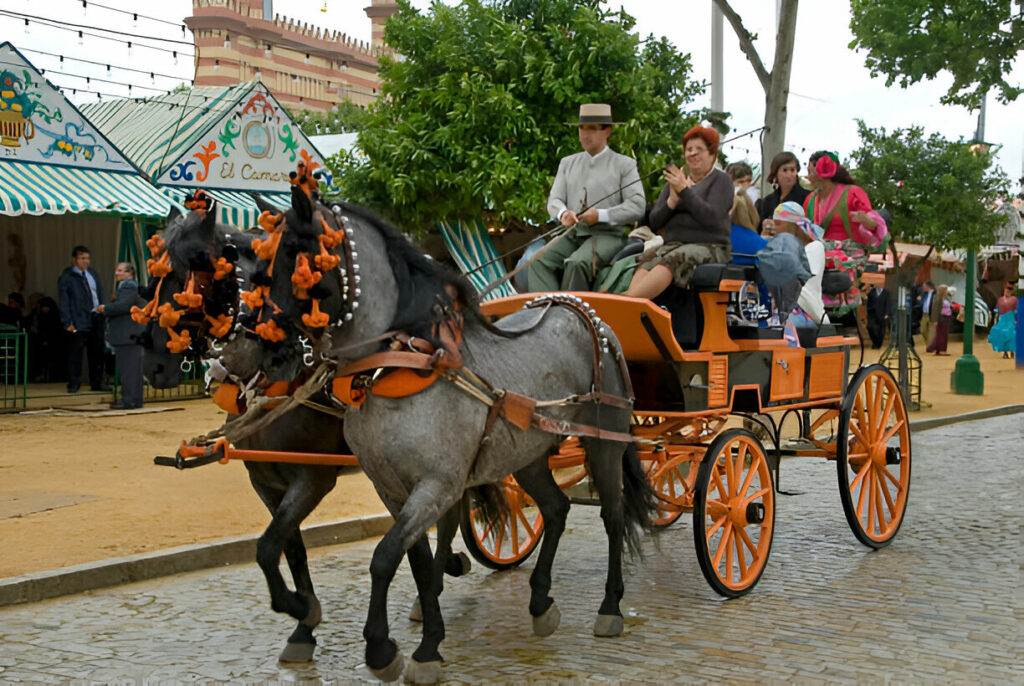
One of the most elegant traditions of the Feria is the horse parade (Paseo de Caballos). Every afternoon, the fairgrounds are filled with beautifully dressed riders and horse-drawn carriages, creating a scene straight out of a painting.
What to expect from the horse parade:
- Riders wear traditional Andalusian outfits: men in traje corto (short jackets, tight trousers, and wide-brimmed hats), and women in flamenco dresses.
- The horses are decorated with colorful accessories, making them even more stunning.
- Horse-drawn carriages carry families, friends, and even celebrities, offering a graceful way to experience the Feria.
Horses are a huge part of Andalusian culture, and the Feria is one of the best places to see Spanish equestrian traditions in full display.
Tip: If you want to ride in a carriage, rent one or book a horse-drawn tour in advance!
Customs and Traditions: How Sevillanos Celebrate the Feria
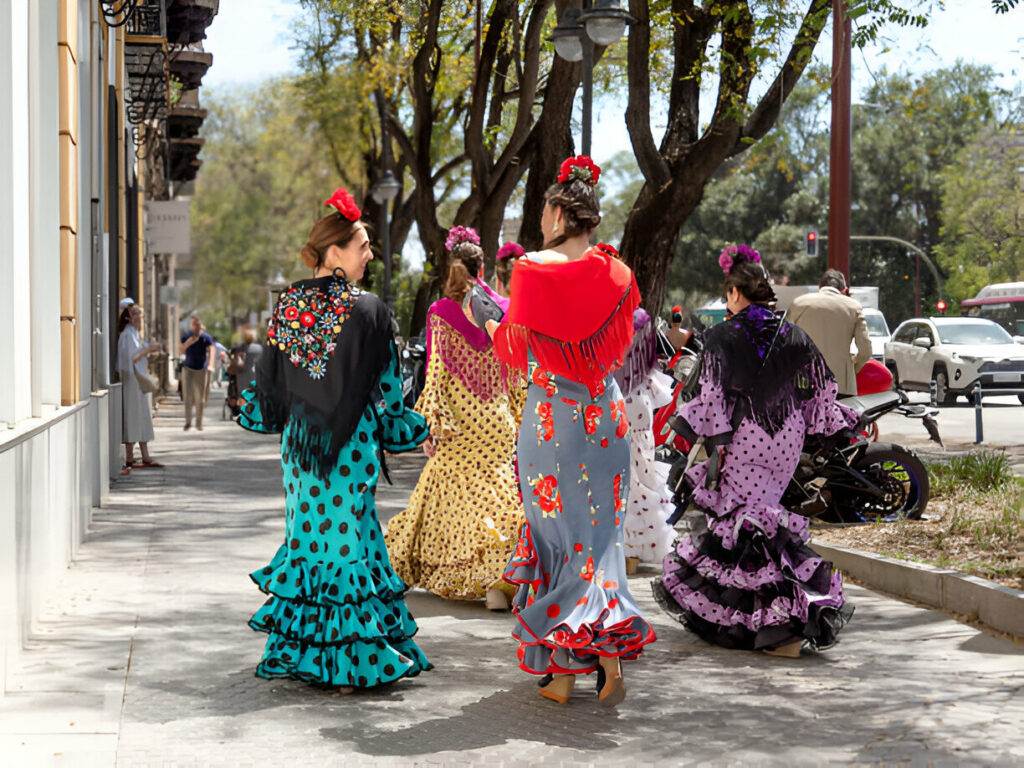
The Fair is not just a party—it’s a celebration filled with customs and deep-rooted traditions. Here are some of the most important ones:
Flamenco Dresses and Traje Corto
Women wear elaborate flamenco dresses (trajes de gitana), adorned with ruffles, polka dots, and matching flowers in their hair. Men wear the traje corto, a traditional Andalusian outfit perfect for riding horses or dancing.
Meeting at the Casetas
Casetas (tents) are the heart of the Fair. They can be private (family-owned) or public, but all serve drinks, food, and music. Sevillanos often spend the entire day in their favorite caseta, eating, drinking, and socializing.
Day vs. Night at the Feria
- During the day: The fair is more relaxed, perfect for watching horse parades and enjoying tapas.
- At night: The Feria explodes with energy—people dance Sevillanas, drink rebujito, and party until sunrise!
La Calle del Infierno: The Feria’s Funfair
Apart from the traditional casetas, the Fair has a massive amusement park, Calle del Infierno (Hell Street), filled with rides, games, and attractions. It’s perfect for families and kids during the day and a fun place to visit at night.
Closing Fireworks
The Fair ends with a spectacular fireworks show over the Guadalquivir River, marking the conclusion of a week of celebration.
Tapas, Montaditos, and Stews: Eating Like a Local
One of the best things about the Fair is that there’s no fixed menu. You can eat at almost any time of the day, whether it’s a small snack with a drink or a full meal with friends.
Some of the most typical tapas you’ll find at the fair include:
Papas Aliñadas – A simple yet delicious potato salad with olive oil, vinegar, and parsley.
Tortilla de Patatas – A thick Spanish omelet with potatoes, sometimes served in bite-sized portions.
Ensaladilla Rusa – A creamy potato salad with tuna, mayonnaise, and vegetables.
Salazones – Salted and cured fish, like mojama (dried tuna).
Cheese and Charcuterie Boards – Manchego cheese, jamón ibérico, chorizo, and picos (crispy breadsticks).
Unlike a regular restaurant, eating at the Feria is all about sharing plates and ordering as you go. Locals love to spend hours snacking, drinking, and enjoying the music.
Fried Fish and Andalusian Fritters: The Fair’s Biggest Stars
No trip to the Feria is complete without tasting Seville’s famous fried fish (pescaíto frito). This dish is so essential that the first night of the fair is called “La Noche del Pescaíto”, dedicated to eating fried seafood.
Pescaíto Frito – A mix of small fried fish, such as anchovies and cuttlefish.
Tortillitas de Camarones – Crispy shrimp fritters from Cádiz.
Calamares Fritos – Deep-fried squid rings.
Cazón en Adobo – Marinated dogfish fried to golden perfection.
These dishes are light, crispy, and perfect for pairing with a cold glass of fino sherry or rebujito.
Jamón, Cheese, and the Art of Sevillian Tapas
One of the simplest yet most delicious things you’ll eat at the Feria is jamón ibérico, thinly sliced and served with queso Manchego and crispy picos.
Jamón Ibérico de Bellota – The finest cured ham, aged for years and made from acorn-fed pigs.
Queso Manchego – A firm, nutty cheese made from sheep’s milk.
Montaditos – Mini sandwiches filled with jamón, chorizo, or pringá (slow-cooked meat spread).
These small bites are perfect for snacking while watching the flamenco dancers or taking a break from the festivities.
The Most Traditional Sevillian Dishes at the Feria
Many of Seville’s classic dishes are served during the fair in the casetas. These include:
Carrillada Ibérica – Slow-cooked Iberian pork cheeks in a rich sauce.
Solomillo al Whisky – Pork loin cooked in a whiskey and garlic sauce.
Rabo de Toro – Oxtail stew, a traditional Andalusian dish.
These are heartier dishes that people usually eat later in the evening, after hours of dancing and drinking.
Sweet Treats: What to Eat for Dessert at the Feria de Sevilla
While tapas and fried seafood steal the spotlight at the Feria, Seville’s traditional desserts offer a perfect way to end a meal or recharge after hours of dancing. The fairgrounds and surrounding stalls are filled with sweet treats, many of which have deep Andalusian and Moorish influences.
Whether you prefer something fried and crunchy, soft and creamy, or soaked in syrup, here are the must-try desserts at the Feria de Sevilla:
1. Buñuelos: The Feria’s Favorite Fried Dough Balls
What are they?
Buñuelos are small, round fried dough balls, crispy on the outside and soft on the inside. They are typically sprinkled with sugar or served with thick, melted chocolate for dipping.
Why eat them at the Feria?
- Vendors freshly fry them on the spot, so they are always hot and crunchy.
- Their light, airy texture makes them the perfect late-night treat after a few drinks.
- They’re easy to eat while walking around the fairgrounds.
Where to find them?
Buñuelo stalls are scattered throughout the fair, especially near La Calle del Infierno (the amusement park area).
2. Churros con Chocolate: The Ultimate Late-Night Snack
What are they?
Churros are long, ridged strips of fried dough, served hot and crispy, with a side of thick, velvety hot chocolate for dipping.
Best time to eat them at the Feria?
- After a long night of dancing, around 3-5 AM, people start looking for something comforting before heading home.
- In the early morning, they become the breakfast of choice for those who stay out all night.
Where to find them?
You’ll find churrerías (churro stalls) near the main entrance of the Feria and around the amusement park.
3. Torrijas: Seville’s Version of French Toast
What are they?
Torrijas are thick slices of bread soaked in milk, honey, and cinnamon, then fried or baked. They have a soft, custard-like texture with a sweet, caramelized crust.
Why are they special?
- Traditionally eaten during Semana Santa (Holy Week), but they remain a favorite during the Feria.
- Their spiced flavor and rich texture make them perfect for pairing with a small glass of sweet wine or sherry.
Where to find them?
Many casetas serve torrijas as a dessert, often homemade by local cooks.
4. Pestiños: The Moorish-Inspired Pastry
What are they?
Pestiños are small, deep-fried pastries made with flour, orange zest, and anise, then coated in honey or sugar syrup. They have a crunchy yet chewy texture and a subtle citrusy aroma.
A bite of history:
- Pestiños has Moorish origins, influenced by Arab pastries rich in honey and spices.
- They are one of the oldest Andalusian sweets, dating back centuries.
Where to find them?
Look for them in traditional bakeries near the Feria, as they are less commonly sold inside the fairgrounds.
5. Polvorones and Mantecados: Andalusia’s Crumbly Cookies
What are they?
- Polvorones are soft, crumbly almond cookies that melt in your mouth.
- Mantecados are shortbread-like pastries made with lard, cinnamon, and sugar.
Not just for Christmas!
Although they are more common during the holidays, many casetas serve them as a light dessert with coffee or a glass of Pedro Ximénez sweet wine.
Where to find them?
They are often gifted or shared in casetas after a meal.
6. Almond and Honey Desserts: A Legacy of Moorish Spain
What are they?
- Turrón – A nougat-like sweet made of toasted almonds and honey.
- Yemas de San Leandro – Small, rich egg yolk and sugar confections, a specialty of Seville’s convents.
Fun fact:
Many of these sweets date back to the Moorish period when Andalusia was influenced by Arabic cuisine.
Where to find them?
Traditional Sevillian pastry shops outside the Feria are the best places to buy them.
Best Time to Eat Sweets at the Feria
When should you enjoy these treats?
Afternoon: Perfect time for a light pastry with coffee.
Late at night (2-5 AM): Churros and buñuelos are the most popular post-party snack.
After lunch or dinner: Enjoy torrijas, pestiños, or polvorones with a sweet wine.
Final Thoughts: Don’t Leave the Feria Without a Sweet Treat!
While the Feria is famous for its fried fish, tapas, and rebujito, its desserts are just as important. Whether you crave churros after a night of dancing, a honey-drizzled pestiño, or a classic torrija, the sweet side of the Feria is something you can’t miss.
Pro tip: To experience these treats outside the Feria, visit one of Seville’s historical pastry shops, like La Campana, before or after the fair!
What to Drink at the Feria de Sevilla
Rebujito – The Feria’s most famous drink, made with fino sherry and lemon soda. Light, refreshing, and dangerously easy to drink!
Manzanilla or Fino Sherry – Dry, slightly salty wines that pair perfectly with fried fish.
Cruzcampo Beer – The go-to local beer of Seville.
Tinto de Verano – A mix of red wine and soda, similar to sangria.
Locals drink all day, but they know how to pace themselves. If you’re not used to sherry, be careful—rebujito is stronger than it seems!
Tips for Eating at the Feria Like a Local
The Feria de Sevilla is not just a festival—it’s a social and cultural event where food plays a central role. Eating at the Feria is a unique experience, but if you want to enjoy it like a true Sevillano, there are a few things you should know. Here are some essential tips to make the most of your gastronomic experience at the fair.
1. Know the Difference Between Public and Private Casetas
Casetas (tents) are where people gather to eat, drink, dance, and socialize. There are two types:
Private Casetas – These are exclusive to families, businesses, and social clubs. You need an invitation to enter, so if you know a local, ask them to take you inside!
Public Casetas – Open to everyone! They serve traditional food and drinks at reasonable prices and offer a fantastic way to experience the Feria.
Pro Tip: Even if you don’t have access to a private caseta, don’t worry! Some of the best food can be found in public ones. Look for casetas run by local organizations or the city council.
2. The Best Times to Eat at the Feria
Unlike regular restaurants, the Feria has a very relaxed dining schedule. People eat at all hours of the day and night, depending on their mood and appetite.
Meal Times at the Feria:
- Early Afternoon (1-3 PM): A lunch with tapas and drinks.
- Late Afternoon (5-7 PM): Snacks, montaditos, and something refreshing.
- Evening (9-11 PM): A full meal with fried fish, meats, and local stews.
- Late Night (2-5 AM): Churros and buñuelos after hours of dancing!
Pro Tip: If you’re in a private caseta, don’t expect a menu—you’ll eat whatever the hosts prepare!
3. Order Like a Local: Tapas and Sharing Culture
Eating at the Feria is a social experience. Instead of ordering an individual dish, most people share plates (raciones) with friends.
Typical Feria Eating Habits:
- Order a few tapas to share, like pescaíto frito, tortilla, and jamón ibérico.
- Pair your meal with rebujito or fino sherry.
- Expect simple, traditional dishes rather than fancy cuisine.
Pro Tip: Don’t be shy. Locals stand while eating and move from caseta to caseta trying different specialties!
4. Bring Cash: Many Casetas Don’t Accept Cards
Many casetas only take cash, so be prepared with small bills and coins to pay for food and drinks. There are ATMs near the fairgrounds, but they often have long lines.
Pro Tip: If you’re going with friends, take turns buying rounds of food and drinks. It’s the Sevillian way!
5. Stay Hydrated and Pace Yourself
Between the sun, the dancing, and the drinks, it’s easy to get dehydrated at the Feria.
Smart Feria Drinking:
- Alternate rebujito with water or soft drinks to stay hydrated.
- Avoid drinking too much too early—the Feria lasts all night long!
- Eat small snacks throughout the day to keep your energy up.
Pro Tip: Sevillanos drink slowly. A single bottle of sherry might last several hours among friends.
6. Plan Your Exit: Where to Find Late-Night Food
After a long night of drinking and dancing, many Feria-goers look for food before heading home. The most popular late-night snack is churros con chocolate.
Where to Find Late-Night Food:
- Churros and buñuelos stands near the fairground exits.
- Sandwiches (montaditos) in casetas that stay open late.
- Fast-food spots and kebab shops outside the Feria area.
Pro Tip: If you stay until sunrise, you must try churros before leaving, it’s a Feria tradition!
Final Thought: Enjoy the Feria Like a True Sevillano!
Eating at the Feria is not just about the food—it’s about the experience. Whether you’re sharing tapas, sipping rebujito, or enjoying a late-night churro, the key is to eat, drink, and celebrate at your own pace. ¡Buen provecho y feliz Feria!
FAQ: Frequently Asked Questions About Eating at the Feria
1. Can tourists eat at the Feria de Sevilla?
Yes! Public casetas allow anyone to enter and order food. Private casetas require an invitation.
2. What is the most traditional dish to try?
Pescaíto frito (fried fish) is the Feria’s signature dish. Pair it with rebujito for the full experience!
3. How much does food cost at the Feria?
Prices vary, but a tapa costs around €3-6, and drinks €2-5.
4. Is the Feria de Sevilla good for vegetarians?
There are some options, like papas aliñadas, tortillas, and fried eggplant, but most traditional dishes include meat or seafood.
Conclusion: Enjoy the Feria with All Five Senses
The Feria de Sevilla is not just a party—it’s a cultural experience, and food plays a major role. Whether you’re snacking on tapas, drinking rebujito, or enjoying fried fish, the key is to eat, drink, dance, and enjoy the moment.
¡Viva la Feria!