
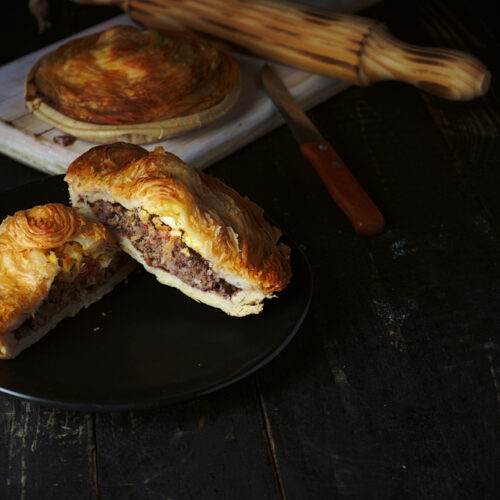
The Murcian meat cake, known locally as “pastel de carne murciano”, is a savory pastry rooted in the southeast region of Spain. It combines a delicate brisé crust, a flaky puff pastry top, and a rich, juicy filling of minced meat, chorizo, and hard-boiled egg. Baked in a tart mold, it delivers a contrast of textures: crisp exterior, tender center, and a bold and balanced flavor profile.
Unlike a generic meat pie, this cake is deeply tied to Murcian identity. It’s not just a recipe; it’s an edible piece of history served during celebrations, family gatherings, or enjoyed at local bakeries.
You taste centuries of tradition when you bite into a well-made Murcian meat cake.
Table of Contents
A Royal History: From Carlos II to Today
The origins of the Murcian meat cake trace back to the 17th century. It was during the reign of King Carlos II of Spain, the last Habsburg monarch, that this dish found its first codified form. Royal guidelines were issued in 1695 outlining strict rules on how the meat cakes should be made. Those who deviated from the method risked exile.
The regulations covered everything from ingredient quality to food hygiene, long before modern health codes. These cakes weren’t just sustenance; they were expressions of refinement and national pride.
Following this tradition, when we bake them today, we still adhere to the original structure. We use top-quality ingredients and replicate the steps as described in those early manuals. The tradition lives on in every layer, from the buttery dough to the seasoned meat.
Traditional Ingredients That Make It Unique
The Murcian meat cake is deceptively simple but requires precision and the right ingredients. Here’s what you’ll typically find:
- Shortcrust base (masa brisa): Provides structure and a buttery flavor.
- Puff pastry top: Gives the signature golden, flaky crust.
- Ground beef or veal: The main protein, often mixed with spices.
- Chorizo: Adds smokiness and depth.
- Hard-boiled egg: Balances the meatiness and adds texture.
- Seasonings: Black pepper, paprika, nutmeg—subtle but essential.
Some variations introduce pine nuts, ham, or even bits of liver, but the core recipe remains remarkably consistent.
As shared from our kitchen: “We followed the traditional method and used the basic, time-honored ingredients of the original recipe.”
Step-by-Step: How to Make an Authentic Murcian Meat Cake
- Prepare the crust: Start with a shortcrust dough for the base. Chill, roll, and line your tart molds.
- Cook the filling: Sauté minced beef with chopped chorizo, adding pepper, paprika, and a touch of nutmeg. Let it cool.
- Assemble: Place the meat filling into the tart shell. Add slices of hard-boiled egg.
- Seal with puff pastry: Roll out the puff pastry and cover the top, sealing the edges tightly.
- Bake: Place in a preheated oven at 200°C (392°F) and bake for 30–40 minutes until golden brown.
- Cool slightly and serve: Best enjoyed warm, but also delicious at room temperature.
It’s a bit of work, but the result is a savory delight that tells a story in every bite.
The Secret Behind the Perfect Pastry
Great dough makes a great meat cake. The base must be firm enough to hold the filling but tender enough to bite cleanly. The top, ideally made with high-quality puff pastry, should rise into delicate layers that crackle under your fork.
We’ve baked this using traditional tart molds and the effect is unbeatable: “The result is juicy, crunchy, and full of flavor. A classic we always come back to.”
Pro tip: Brush the top with egg wash before baking to get that classic golden sheen.
Why It’s More Than Just a Savory Pie
What sets the Murcian meat cake apart is how it straddles the line between rustic and regal. It’s simple enough to be street food, yet elaborate enough to be fit for a royal decree. Its cultural importance, historical roots, and enduring presence in Murcian life elevate it beyond the plate.
In Murcia, this isn’t just a local dish—it’s culinary heritage. It’s a reminder of tradition preserved, not by museums, but by hands in kitchens across the region.
And when you’ve made one yourself, respecting every step and ingredient, you become part of that story too.
Spanish Recipes Related to the Murcian Meat Cake
Looking to explore more Spanish meat-based pastries? These classics are a good place to start:
- Empanadas gallegas: Filled with tuna, peppers, or meat in a bread-like dough.
- Hornazo de Salamanca: Another meat pie, traditionally eaten during Easter.
- Coca de recapte (Catalonia): A flatbread topped with roasted vegetables and sausages.
- Pan de jamón (Venezuelan-Spanish crossover): A Christmas bread filled with ham, olives, and raisins.
Each shares something in common: humble ingredients, historical roots, and enormous regional pride.
Frequently Asked Questions About Murcian Meat Cake
Is the Murcian meat cake served hot or cold?
Traditionally, it’s served warm, but it’s just as delicious at room temperature.
Can I make it without chorizo?
Yes, but you’ll miss the smokiness. Consider adding smoked paprika as a substitute.
Is it the same as a meatloaf?
Not at all. The Murcian meat cake is encased in pastry, not a free-standing loaf.
Where can I find it in Spain?
Local bakeries in Murcia sell it daily. Some tapas bars also serve mini versions.
Can I freeze it?
Absolutely. Bake it fully, let it cool, and freeze. Reheat in the oven for best results.
Where to Taste the Best Murcian Meat Cake in Spain
Murcia is your best bet. Visit:
- Pastelería Bonache – A legendary bakery in Murcia City known for its perfect meat cakes.
- La Colegiala – Local chain with consistent quality and variety.
- Local markets – Look for stalls in the Verónicas Market or Plaza de las Flores.
Try it with a cold beer or a glass of Jumilla red wine for the full experience.
Final Thoughts: A Flavor Worth Sharing
The Murcian meat cake is not just a recipe; it’s a tradition handed down over centuries. It reflects Spain’s culinary evolution, the importance of preserving cultural dishes, and the joy of a perfectly balanced savory pastry.3
Whether you make it at home or taste it in Murcia itself, one thing is certain: you’ll remember it.
If you’ve enjoyed this story, subscribe to our newsletter for more hidden culinary gems from Spain. Or leave a comment below and share your own Murcian meat cake experience!
7 Reasons to Love the Authentic Murcian Meat Cake
Ingredients
For the shortcrust base (masa brisa):
- 250 g All-purpose flour
- 125 g Cold butter (cubed)
- 1 Egg yolk
- 1 tsp Salt
- 2-3 tbsp Cold water
For the filling:
- 300 g Minced beef or veal
- 100 g Spanish chorizo (diced)
- 2 Hard-boiled eggs (sliced)
- 1 Small onion (finely chopped)
- 1 tsp Paprika
- ½ tsp black pepper
- Salt to taste
- 1 tbsp Extra virgin olive oil
For the puff pastry top:
- 1 Sheet of quality puff pastry
- 1 Egg (beaten, for brushing)
Instructions
- Prepare the crust: Start with a shortcrust dough for the base. Chill, roll, and line your tart molds.
- Cook the filling: Sauté minced beef with chopped chorizo, adding pepper, paprika, and a touch of nutmeg. Let it cool.
- Assemble: Place the meat filling into the tart shell. Add slices of hard-boiled egg.
- Seal with puff pastry: Roll out the puff pastry and cover the top, sealing the edges tightly.
- Bake: Place in a preheated oven at 200°C (392°F) and bake for 30–40 minutes until golden brown.
- Cool slightly and serve: Best enjoyed warm, but also delicious at room temperature.