
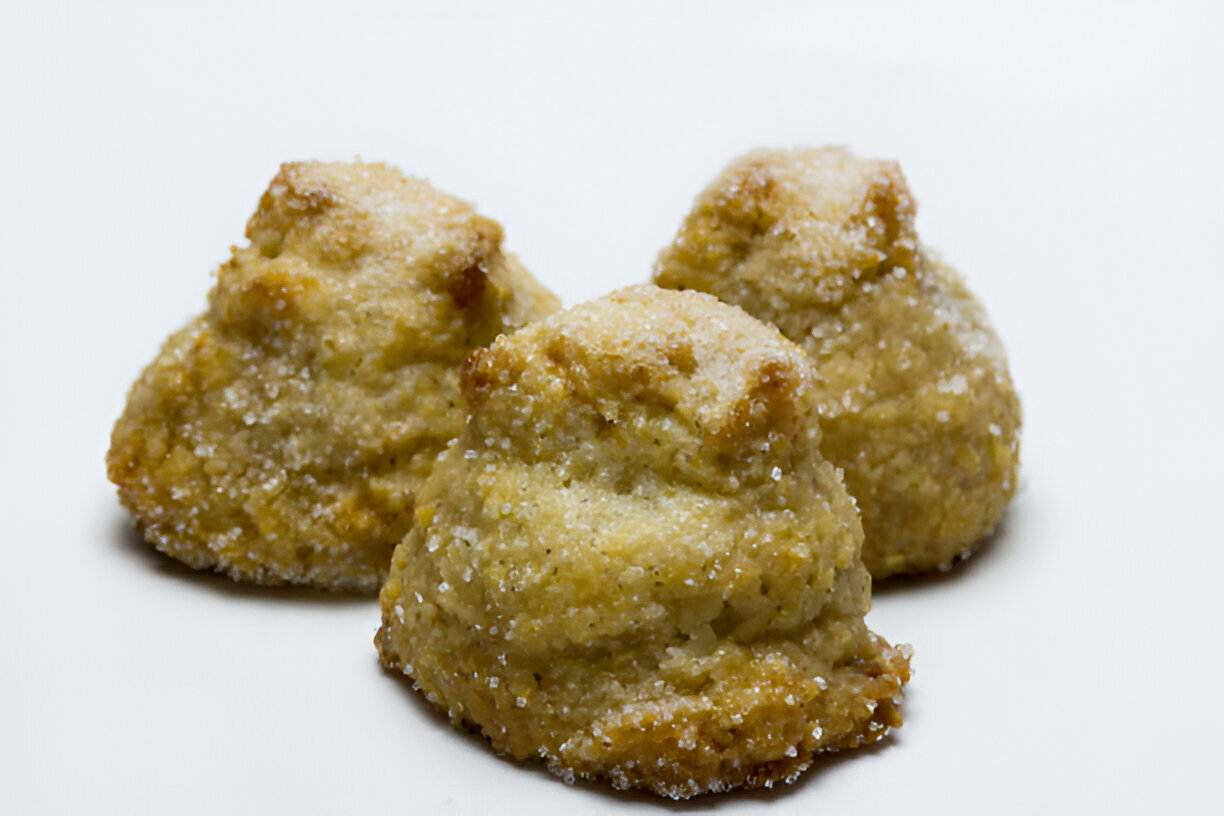
They say that if you want to understand the flavor of Murcian history, all you need to do is take a bite of a cordial. This sweet, delicate treat, filled with almond paste and a heart of golden cabello de ángel (angel hair pumpkin jam), is more than a dessert. It’s a symbol of tradition, celebration, and the deep culinary roots of southeastern Spain.
I still remember how the scent of toasted almonds and lemon zest filled our house during December. My family, like many others in the Campo de Cartagena, would spend hours shaping cordiales by hand, placing them on trays lined with crisp rice paper, and waiting for them to bake into golden domes of joy. They were a staple on every holiday table, right beside nougat and polvorones, and no Christmas was complete without them.
Cordiales are traditionally made during the holidays in regions like Torre Pacheco and Beniel, yet they’ve started charming bakers and food lovers worldwide. Whether you’re Spanish or simply curious about one of Spain’s lesser-known sweet gems, cordiales are a recipe worth mastering.
In this guide, I’ll take you through every step, sharing tips I’ve picked up from personal experience, outlining the historical roots, and giving you a recipe that works beautifully in any kitchen.
Table of Contents
1. What Are Murcian Cordiales and Why You Should Try Them
Murcian cordiales are a traditional Spanish Christmas pastry that combines ground almonds, sugar, lemon zest, egg, and cabello de ángel—a golden, jam-like preserve made from calabaza de cidra (citron squash). Shaped into small domes and often set atop oblea or rice paper, these confections are baked until lightly golden on the outside, while remaining moist and chewy within.
But cordiales are much more than their ingredients. They are a link to centuries-old traditions, possibly with Jewish or Arab roots, and later refined in convent kitchens, where nuns perfected the art of sweet-making. Each bite captures the rich cultural mix of Murcia, a region whose gastronomy is as diverse as its history.
Why should you try them? For starters, they’re naturally gluten-free, require just a handful of pantry staples, and have a taste like no other. Their simplicity is deceptive—beneath the modest ingredients lies a balance of texture and flavor that feels both festive and comforting.
From the slight crispness of the baked almond exterior to the luscious silkiness of the angel hair filling, cordiales offer a harmony of sensations. And because they store well, they make ideal gifts or make-ahead treats during the holiday rush.
Plus, they’re a fun way to bring a bit of Spanish tradition to your kitchen—whether you’re hosting a multicultural Christmas, exploring Iberian cuisine, or want something that stands apart from the usual holiday cookies.
2. A Sweet History: The Convent, the Almond, and the Legacy
Cordiales trace their lineage to the deep, interwoven histories of the Iberian Peninsula. Almonds were introduced by the Moors and flourished in the Murcian climate. Meanwhile, sugar, once a luxury, became more accessible through trade and colonial imports. Combine these ingredients with religious devotion, and you get the birth of the convent confection.
Many Spanish sweets, like yemas de Santa Teresa or turrón, originated in cloisters where nuns used simple ingredients to craft divine treats. Cordiales were no exception. The legend says that nuns in Murcia began making these treats to raise funds and offer gifts to the benefactors of their convents.
Still, some culinary historians point further back, to Arab sweet-making traditions that relied on ground nuts and fruit preserves, wrapped in pastry or layered with honey. Others suggest Sephardic Jewish roots, noting similarities with almond-based treats in North Africa and the Eastern Mediterranean.
Regardless of the precise origin, cordiales have remained a local treasure for centuries. You’re unlikely to find them in supermarkets outside Spain; even in Spain, they are deeply regional. That makes learning to make them not just a culinary act, but one of preservation.
Growing up, I’d hear stories from my abuela about how, during wartime and scarcity, making cordiales was a sacred ritual. Almonds were expensive, and the preserves had to be made by hand over several hours. The process wasn’t just about dessert—it was about gathering, working together, and sharing a legacy.
3. Key Ingredients: From Almond Flour to Cabello de Ángel
To make cordiales, you’ll need a few core ingredients, but the quality and handling of each make all the difference.
- Almond meal (almendra molida): Blanched, finely ground almonds are the foundation. You can buy pre-ground almond flour or make your own by pulsing blanched almonds in a food processor.
- Sugar: Regular granulated sugar works well, although some use powdered sugar for a finer texture.
- Eggs: Usually just the yolks, though some recipes incorporate a bit of egg white.
- Lemon zest: Provides aromatic lift and cuts through the richness.
- Cabello de ángel (angel hair jam): This is essential. It’s a sweet preserve made from a type of gourd, golden and fibrous, with a taste similar to candied melon. You can find it in Spanish grocery stores or online.
- Oblea (rice paper): Optional, but traditional. These thin discs prevent sticking and add a slight crispness at the base.
From personal experience, I’ve found that using freshly grated lemon zest (never bottled!) and letting the almond mixture rest before shaping yields a deeper, rounder flavor. And while cabello de ángel can seem unusual, it’s exactly what makes these treats memorable—don’t skip it or substitute with typical jam.
For the best results, use a scale to measure ingredients. Cordiales are all about texture, and getting the balance right is key.
4. 7 Easy Steps to Make Authentic Murcian Cordiales at Home
Here’s my go-to recipe, distilled from years of making these every December. This makes about 20–24 cordiales.
Ingredients:
- 250 g ground almonds
- 200 g granulated sugar
- 3 egg yolks
- Zest of 1 lemon
- 200 g cabello de ángel
- Rice paper sheets (optional)
Instructions:
- Preheat and prep: Heat your oven to 180°C (350°F). Line a baking tray with parchment paper or rice paper discs.
- Mix dry ingredients: In a bowl, combine the almond meal, sugar, and lemon zest.
- Add egg yolks: Incorporate the yolks gradually, mixing with your hands until you get a firm but pliable dough.
- Let it rest: Cover and refrigerate for 30–60 minutes. This helps the flavors meld and firms up the dough.
- Form the cordiales: Take a small piece of dough, flatten it in your palm, add a small spoonful of cabello de ángel in the center, and carefully wrap it to form a dome.
- Place and bake: Set each cordial onto a rice paper disc (if using) or directly onto the tray. Bake for 12–15 minutes, until lightly golden but not browned.
- Cool and store: Let them cool fully before storing in an airtight container. They keep beautifully for up to two weeks.
Each year, when I reach step five, I’m reminded of sitting at the table with my mother, gently folding each cordial while she reminded me: “It’s not about perfection. It’s about love.” That’s the real final ingredient here.
5. Tips from My Kitchen: What I Learned Making Cordiales
If there’s one thing you should know before diving into this recipe, it’s this: cordiales are deceptively simple. While the ingredient list is short, achieving the perfect texture and shape takes patience—and a few insights I’ve learned over the years.
First, don’t skip the resting step. When I first tried making cordiales on a whim, I was too eager to bake them right after mixing the dough. Big mistake. The dough was too sticky, and they lost their shape in the oven. Chilling firms everything up and gives the flavors time to settle.
Second, go easy on the cabello de ángel. It’s tempting to be generous, but overfilling leads to leaks during baking. The goal is a gentle center of sweetness, not a jam explosion.
Another tip: shape them with damp hands. The dough can be quite sticky, and wetting your palms lightly makes it easier to work. I keep a small bowl of water nearby and dip my fingers every few cordiales.
Lastly, don’t overbake. They should be just golden at the top. Even a few extra minutes can dry out the center, which should remain soft and tender. The first time I nailed the timing, I understood why these pastries are legendary in Murcia. The exterior was crisp, but the interior? Pure almond heaven.
These little lessons—most of them learned through trial and error—turned what once felt intimidating into an annual ritual. Every batch brings me closer to the flavors of my childhood, and closer to the generations who made these before me.
6. Storage, Texture, and When to Serve Cordiales
Cordiales are a gift to hosts and holiday planners everywhere. Why? Because they store well, travel beautifully, and improve in texture after a day or two.
Storage:
Keep your cordiales in an airtight tin or container at room temperature. They stay fresh for up to two weeks and develop a richer flavor over time. I often make mine a few days before Christmas to let the oils from the almonds bloom.
Texture:
When baked right, the exterior should be just firm—never crunchy—and the interior should be moist, dense, and sweet. The cabello de ángel offers a luscious contrast to the nutty base, and the lemon zest adds an aromatic lift.
Best time to serve:
- After a big holiday meal, with coffee or dessert wine.
- As part of a Christmas cookie spread.
- Wrapped in cellophane as a thoughtful homemade gift.
In my house, they’re brought out right after midnight mass on Christmas Eve. There’s something deeply comforting about coming home to a plate of cordiales, still faintly warm, paired with a hot cup of café con leche. That first bite feels like coming home—even if you’re thousands of miles from Murcia.
7. Frequently Asked Questions about Murcian Cordiales
Can I substitute the cabello de ángel with another jam?
Technically, yes, but it won’t be authentic. Cabello de ángel has a unique texture and flavor that defines cordiales. If needed, candied squash or firm marmalade is the closest substitute.
Can I freeze cordiales?
Yes, they freeze well. Place them in a single layer with parchment between layers. Thaw at room temperature.
What if I can’t find rice paper?
Just bake them directly on parchment. Some bakers use mini cupcake liners, too.
Are they gluten-free?
Yes! No wheat flour is used, making them naturally gluten-free.
Can I make them vegan?
You could try using flax eggs or egg replacers, though I haven’t personally tested a vegan version. The yolks help bind the dough.
Where can I buy cabello de ángel?
Look in Spanish or Latin food stores, or order online. Brands like El Quijote or Hida are common.
8. Other Spanish Recipes You’ll Love
If you enjoyed Murcian cordiales, here are a few more classic Spanish treats worth exploring:
- Polvorones: Crumbly almond cookies dusted in powdered sugar.
- Turrón de Jijona: A soft almond nougat from Alicante.
- Roscos de vino: Wine-infused rings dusted with sugar.
- Pestiños: Fried honey-glazed pastries from Andalusia.
- Yemas de Santa Teresa: Rich egg yolk confections from Ávila.
All of them share the hallmark of traditional Spanish sweets: simple ingredients, soulful preparation, and deep cultural roots.
9. Conclusion: Join the Tradition and Share Your Experience
Murcian cordiales may be a small pastry, but they hold within them centuries of tradition, the soul of Spanish Christmas, and the quiet joy of handmade food. Whether this is your first time making them or part of your yearly ritual, I hope you find the same warmth and satisfaction that I do each December.
If this recipe brought a little bit of Murcia into your kitchen, I’d love to hear about it.
Leave a comment below with your experience, or subscribe to the newsletter for more authentic Spanish recipes delivered monthly. Let’s keep these traditions alive, one bite at a time.
Murcian Cordiales: 7 Irresistible Steps to Master Them
Ingredients
- 250 g Ground almonds
- 200 g granulated sugar
- 3 Egg yolks
- Zest of 1 lemon
- 200 g Cabello de ángel
- Rice paper sheets (optional)
Instructions
- Preheat and prep: Heat your oven to 180°C (350°F). Line a baking tray with parchment paper or rice paper discs.
- Mix dry ingredients: In a bowl, combine the almond meal, sugar, and lemon zest.
- Add egg yolks: Incorporate the yolks gradually, mixing with your hands until you get a firm but pliable dough.
- Let it rest: Cover and refrigerate for 30–60 minutes. This helps the flavors meld and firms up the dough.
- Form the cordiales:Take a small piece of dough, flatten it in your palm, add a small spoon of cabello de ángel in the center, and carefully wrap it to form a dome.
- Place and bake: Set each cordial onto a rice paper disc (if using) or directly onto the tray. Bake for 12–15 minutes, until lightly golden but not browned.
- Cool and store: Let them cool fully before storing in an airtight container. They keep beautifully for up to two weeks.



hi can you please tell us how to make the jam ( angel hair???)